Biotechnology
Associate in Science (A.S.)
Become a scientist, researcher, or entrepreneur with a degree in biotechnology. Help discover new ways to create safer foods, better treatments for diseases, improve renewable energy efficiency, and more.
Career Outlook: Biotech Research
Biotechnology is a rapidly advancing field that combines biology and technology to develop innovative products and services. According to the U.S. Bureau of Labor Statistics, employment in the biotechnology industry is projected to grow by 7% by 2031.
Find work in a variety of industries, including pharmaceutical and biotech companies, research and development firms, academic institutions, and government agencies.
A.S. Program Overview
This program focuses on the science behind biofuels, genetically modified foods, biomanufacturing, cell and tissue culture, drug development, protein expression and purification, and recombinant DNA technology. You'll also have opportunities to participate in undergraduate research projects through the Community College Undergraduate Research Initiative (CCURI).
Coursework includes biology, chemistry, and information management as well as general education electives that prepare you to transfer to a four-year college.
Biotechnology Lab at FLCC
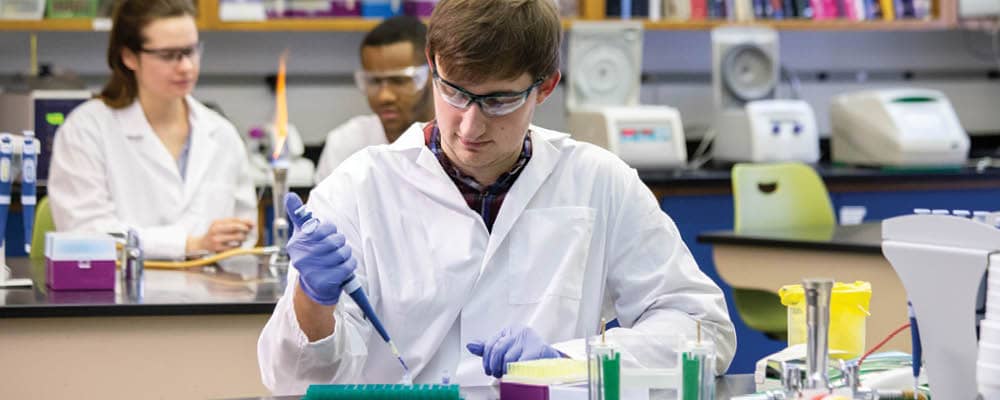
Much of your coursework takes place in our state-of-the-art biotechnology lab. Here, you'll gain hands-on experience with scientific research methods and industry-standard lab techniques.
Learn how to use cell culture and cryogenic equipment, bioreactors, and electrophoresis equipment. You can expect one-on-one classroom instruction with a focus on new, groundbreaking techniques in biotechnology.
Connect With Employers
Develop your professional network, find job opportunities, and connect with biotech experts while you're still a student. Our instructors have a strong network of professional connections with biotech employers and transfer institutions. Faculty use the National Science Foundation funded innovATEBIO community to help you find the next step to reach your goals.
A.S. Program Outcomes
Program Learning Outcomes
Upon completion of this degree program, students will be able to:
- Demonstrate proficiency in workplace "soft skills" including an industry acceptable level of technical writing and oral communication.
- Demonstrate an ability to work in collaborative teams.
- Demonstrate an ability to perform basic laboratory procedures, including the ability to select and utilize appropriate resources, supplies, and instrumentation to solve problems within a laboratory environment.
- Demonstrate proficiency in critical advanced laboratory skills required for employment in the biotechnology industry.
- Demonstrate a basic understanding of the biotechnology industry.
Seamless Transfer Opportunities
This program prepares you to transfer to a four-year college or university and continue your education in biotechnology. Some colleges and universities in the region that have a biotech or related program include:
- Cornell University
- Rochester Institute of Technology
- SUNY Brockport
- SUNY College of Environmental Science and Forestry
- SUNY Oswego
- Syracuse University
Four-Year Career Pathways
After earning an advanced degree in biotechnology, you'll be ready to pursue a variety of career opportunities in agriculture, science, and medical research fields. Some career options include:
- Agricultural and Food Scientists
- Biomedical Engineers
- Clinical Laboratory Technologists
- Epidemiologists
- Medical Scientists
- Microbiologists
Low-Cost Tuition and Scholarship Opportunities
Earn a quality education at an affordable rate. With our low cost-per-credit and general scholarship opportunities, you can maximize your potential with minimal debt. 80% of students are awarded scholarships or financial aid that help with the cost of college.
Faculty
Biotech faculty bring a wide range of talent and real-world experience to the classroom. Each faculty member specializes in a particular area of the discipline, including biology, chemistry, and math. Our instructors strive to stay current with industry skills and expertise. FLCC is committed to providing you the most up-to-date programs, courses, and educational experience.
CCURI: Real Research
The Community College Undergraduate Research Initiative (CCURI) provides students with access to authentic research experiences from day one.
Explore Your Career Options
Map out a path toward your future career, and discover opportunities related to this area of study.